
The prospect of buying property in Vietnam for foreigners has become increasingly attractive, supported by the country’s dynamic economy, expanding urban centres and distinctive lifestyle appeal. Yet for international buyers, navigating Vietnam’s legal framework can be one of the most challenging aspects of the purchasing journey. This comprehensive guide explains the process in detail, from foreign ownership eligibility and permitted property types to purchase procedures, taxes, financing options and legal risks. The objective is to provide a clearer foundation for making a well-informed and carefully considered property decision in Vietnam.
Understanding Foreigner Eligibility for Property Ownership in Vietnam
Since Vietnam expanded residential ownership opportunities for foreign buyers, the market has become considerably more accessible to international purchasers. However, before exploring individual properties, it is essential to determine whether you meet the legal eligibility requirements.
The regulatory framework sets out specific conditions governing who may acquire residential property and under what circumstances.

Current Legal Framework for Non-Vietnamese Buyers
The framework governing foreign ownership of property in Vietnam is based on Vietnam’s housing legislation and its accompanying regulations.
These provisions significantly broadened access compared with earlier rules, allowing eligible foreign individuals and organisations to acquire certain categories of residential property.
The broader policy objective has been to encourage foreign investment while supporting a more transparent and professionally regulated property market.
For international buyers, however, the key consideration is not simply whether foreign ownership is permitted, but how that ownership is structured and what restrictions apply.
Who Qualifies to Purchase Property in Vietnam?
Not every foreign national automatically qualifies to purchase residential property in Vietnam.
Under the framework described in the original material, two principal categories may be eligible:
- Foreign individuals legally permitted to enter Vietnam: Buyers must hold a valid passport together with lawful entry documentation issued or recognised by the Vietnamese immigration authorities. A temporary residence card or work permit is not necessarily required solely for the purpose of purchasing residential property.
- Foreign-invested organisations and enterprises: Foreign-invested companies, branches and representative offices of foreign enterprises legally operating in Vietnam may also be eligible to acquire residential property within the limits prescribed by law.
One of the principal requirements for foreigners to buy a house in Vietnam is therefore the ability to demonstrate lawful entry or legal operating status at the time of the transaction.
Property Ownership Regulations for Foreigners
Understanding the nature and limitations of ownership is fundamental before beginning a property search.
Vietnam applies specific restrictions to foreign purchasers, and these should be evaluated carefully before any reservation fee, deposit or contractual commitment is made.

The 50-Year Ownership Structure Explained
This is one of the most important concepts for international buyers to understand.
Unlike the conventional freehold structure available in some jurisdictions, foreign individuals generally receive residential ownership for a limited period, commonly described as a 50-year ownership term.
This aspect of Vietnam property law for foreigners frequently creates confusion, particularly among buyers accustomed to perpetual ownership systems.
In practical terms:
- You may exercise ownership rights over the residential property during the permitted ownership period.
- You may generally sell, lease, gift or transfer the property, or leave it as an inheritance, subject to applicable regulations.
- Upon expiry of the ownership term, an extension may be available in accordance with the law in effect at that time.
The 50-year leasehold in Vietnam, as commonly described in international property discussions, therefore represents a time-limited ownership structure rather than perpetual freehold title.
For foreign investors, the remaining ownership term should always be considered when assessing resale value, long-term holding strategies and exit planning.
Permissible Property Types: Apartments, Condominiums and Houses
Foreign buyers are generally permitted to acquire residential property located within approved commercial housing developments.
Eligible property types may include:
- Condominium apartments.
- Private houses within residential developments.
- Villas.
- Townhouses and other landed residential units located within approved housing projects.
Foreign buyers are not generally permitted to purchase residential property outside the categories and developments allowed under the applicable legal framework.
This makes project-level legal due diligence particularly important.
Restrictions on Direct Land Ownership
Vietnam’s land ownership system differs fundamentally from many Western markets.
Under the Vietnamese legal framework, land belongs to the entire people and is administered by the State. As a result, individuals do not hold land in the same form of perpetual private ownership commonly found in freehold jurisdictions.
Instead, legally recognised parties receive land use rights.
For foreign residential buyers, their rights relating to the land are associated with the permitted ownership of the residential property and the applicable ownership term.
This distinction is essential when evaluating buying property in Vietnam for foreigners, particularly for buyers comparing Vietnam with countries where land and buildings are held under a unified freehold title.
Understanding the Foreign Ownership Quota in Residential Developments
Vietnam also imposes limits on the proportion of residential property that foreign buyers may own within a development.
According to the framework presented in the source material:
- For condominium buildings: Foreign ownership may not exceed 30% of the total number of apartments in a condominium building.
- For developments containing individual houses: Foreign ownership is subject to limits based on the number of houses within the development and the applicable regulatory thresholds.
Before reserving a property, foreign buyers should confirm that the project’s foreign ownership quota remains available.
A luxury apartment may be fully available from a commercial perspective yet unavailable to a foreign purchaser if the statutory foreign ownership allocation has already been reached.
Freehold Ownership: Is It Available to Foreign Buyers?
Direct perpetual freehold ownership is generally not the standard ownership structure available to individual foreign buyers in Vietnam.
However, the source material highlights a particular circumstance involving marriage to a Vietnamese citizen, under which different ownership rights may apply.
Because ownership status can depend on nationality, marital status, property type and the prevailing legal framework, buyers in this situation should obtain independent legal advice before completing a transaction.
A Step-by-Step Guide to Buying Property in Vietnam
The property acquisition process can be relatively straightforward when it is approached methodically and supported by professional advice.
The following stages outline the principal steps commonly involved in buying property in Vietnam for foreigners.
Step 1: Property Search and Due Diligence
The first stage involves considerably more than selecting an attractive apartment or villa.
Foreign buyers should conduct comprehensive due diligence on both the property and the development.
Key checks may include:
- The reputation and financial capability of the developer.
- The project’s legal approval status.
- Construction permits.
- The developer’s land use documentation.
- Whether the property is legally eligible for sale.
- Whether the development may be sold to foreign purchasers.
- Whether the foreign ownership quota remains available.
The quality of due diligence conducted at this stage can have a major influence on the security of the entire investment.
Step 2: Signing the Sale and Purchase Agreement (SPA)
Once the property has been selected and the commercial terms have been agreed, the buyer proceeds to the Sale and Purchase Agreement, commonly referred to as the SPA.
This is one of the most important legal documents in the transaction because it establishes the contractual obligations of both the buyer and the developer or seller.
The agreement should be reviewed carefully, with particular attention to:
- Purchase price.
- Payment schedule.
- Handover date.
- Property specifications.
- Penalty provisions.
- Rights and responsibilities of each party.
- Ownership documentation.
- Conditions relating to delays or contractual breaches.
For high-value transactions, independent legal review before signing is strongly advisable.
Step 3: Payment Schedule and Fund Transfers
For properties purchased directly from a developer, payments are commonly structured in instalments linked to the construction or contractual schedule.
Foreign buyers may need a Vietnamese bank account to facilitate payments and document the lawful transfer of funds.
Payments to the developer should be made through properly documented banking channels.
Maintaining clear records of all incoming funds and property payments can also become important later, particularly when selling the property or transferring proceeds abroad.
Step 4: Property Handover and Receiving the Pink Book
Once construction is complete and the required payments have been made, the developer proceeds with the handover process.
The final stage involves getting a Pink Book in Vietnam.
The “Pink Book” is the commonly used term for the Certificate of Land Use Rights, Ownership of Residential Houses and Other Assets Attached to Land.
For the property owner, it is one of the most important legal documents evidencing recognised ownership rights.
Foreign buyers should therefore verify:
- Who is responsible for submitting the application.
- Which documents must be provided.
- What fees remain payable.
- The estimated administrative processing timeline.
Financial Breakdown: Property Costs, Taxes and Fees
The advertised purchase price is only one part of the total acquisition cost.
International buyers should also budget for taxes, registration charges, maintenance contributions and ongoing management expenses.
Factors Influencing Property Prices for Foreign Buyers
Property prices in Vietnam vary according to several factors, including:
- Location.
- City and district.
- Developer reputation.
- Construction quality.
- Project positioning.
- Views and orientation.
- Floor level.
- Amenities.
- Infrastructure connectivity.
- Legal status.
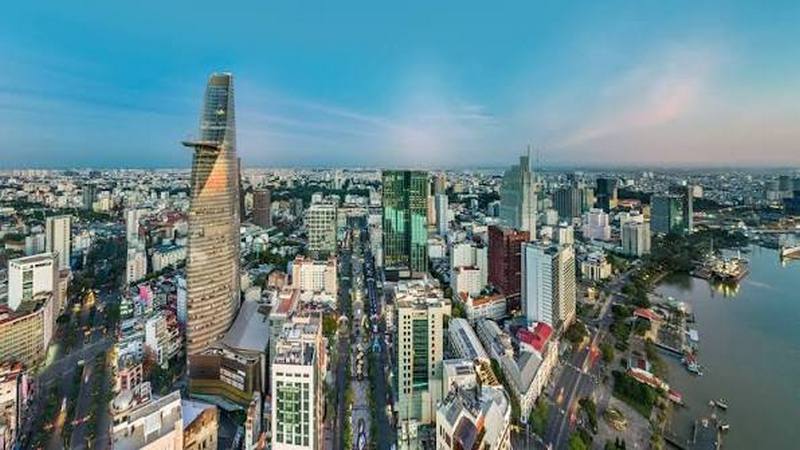
Prime developments in Ho Chi Minh City and Hanoi generally command higher prices than projects in secondary markets.
Within the luxury segment, properties with river frontage, landmark views, international-standard management and limited supply may command significant premiums.
Foreign buyers generally purchase the same underlying property product as domestic buyers, although their ownership eligibility may be subject to foreign ownership quotas and specific legal conditions.
Overview of VAT and Registration Fees
When purchasing a new property from a developer, buyers may need to account for several statutory charges.
According to the source material, these commonly include:
- Value Added Tax (VAT): Generally calculated at 10% of the applicable apartment sale value, excluding the land use rights component.
- Registration Fee: Approximately 0.5% of the relevant property value when completing ownership registration procedures.
These costs should be incorporated into the acquisition budget rather than treated as incidental expenses.
Ongoing Expenses: Management Fees and Maintenance Contributions
After handover, property owners may also be responsible for recurring and one-off building-related charges.
These commonly include:
- Management fees: Monthly charges covering services such as security, cleaning, common-area maintenance, landscaping and building operations.
- Maintenance Fund or Sinking Fund: A one-time contribution, commonly equivalent to approximately 2% of the apartment sale price before VAT, used for major future repairs and maintenance of common property.
In premium developments, management fees can be considerably higher because of enhanced services, landscaped facilities, concierge operations and sophisticated building systems.
Property Taxes for Non-Resident Owners
Regarding property taxes in Vietnam for non-residents, the source material describes the current structure as comparatively straightforward.
Vietnam does not currently impose a broad annual residential property tax comparable to those levied in some Western markets.
However, tax obligations may arise when income is generated from the property.
For example:
- Rental income may be subject to applicable taxes.
- When a property is sold, the seller may be subject to personal income tax, described in the source material as 2% of the transfer value.
Foreign owners should obtain tax advice tailored to their personal residency status and transaction structure.
Financing Options for Foreign Property Buyers
Access to mortgage financing in Vietnam can be more challenging for foreign buyers than for Vietnamese citizens.
Understanding the limitations in advance can help investors create a more realistic acquisition strategy.
Can a Foreigner Obtain a Mortgage from a Vietnamese Bank?
Potentially, yes, although approval is not always straightforward.
Some Vietnamese banks may offer mortgage products to foreign borrowers, but eligibility requirements tend to be more restrictive than those applied to domestic purchasers.
Each bank applies its own lending criteria, meaning approval is assessed on a case-by-case basis.
Common Challenges in Securing Local Financing
Foreign buyers may encounter several obstacles when applying for a mortgage.
These can include:
- Residency requirements: Some lenders may require a long-term temporary residence card or work permit.
- Income verification: Demonstrating stable income can be more complicated where earnings are generated outside Vietnam.
- Loan tenure: Financing terms for foreign borrowers may be shorter than those available to Vietnamese citizens.
- Documentation: Banks may require extensive evidence relating to income, employment, residency and the property itself.
Because of these constraints, financing should ideally be explored before committing to a substantial non-refundable deposit.
Alternative Financing Methods to Consider
Many international buyers therefore consider alternative financing arrangements.
These may include:
- Using personal capital: Often the most straightforward approach.
- Borrowing in the buyer’s home country: Some investors use another asset as collateral in their home jurisdiction and deploy the proceeds in Vietnam.
- Developer payment plans: Major developers may provide extended payment schedules or collaborate with banks to offer buyer-support programmes.
The appropriate structure depends on the buyer’s liquidity, currency exposure, investment horizon and financial circumstances.
Navigating Potential Risks and Pitfalls
Every property market contains risk.
In Vietnam, the combination of project-level legal requirements, foreign ownership limits and administrative procedures makes careful preparation particularly important for overseas buyers.
The Importance of Vetting Developers and Real Estate Agents
The developer’s reputation can have a significant impact on both the quality and long-term value of the property.
Before committing capital, buyers should investigate:
- Previously completed developments.
- Construction quality.
- Handover history.
- Resident feedback.
- Financial capability.
- Legal track record.
- Property management standards after completion.
The same principle applies when selecting an estate agency.
Foreign buyers should prioritise advisers with a demonstrable record of working with international clients and a clear understanding of foreign ownership regulations.
The Role of Independent Legal Counsel
Independent legal counsel can provide an additional layer of protection throughout the acquisition process.
A qualified property lawyer may assist with:
- Verifying the legal status of the development.
- Reviewing the SPA and associated documentation.
- Explaining ownership restrictions.
- Advising on tax obligations.
- Reviewing fund-transfer procedures.
- Supporting ownership registration.
- Representing the buyer during legal or administrative procedures where required.
Compared with the value of a premium property investment, the cost of professional legal advice is relatively modest and can significantly reduce transactional risk.
Common Complications to Be Aware Of
Potential complications may include:
- Delays in property handover.
- Delays in issuing the Pink Book.
- Construction quality differing from expectations.
- Additional charges not clearly anticipated at the beginning.
- Disputes relating to contractual obligations.
- Foreign ownership quota limitations.
- Difficulties transferring or repatriating funds.
A well-drafted contract, careful due diligence and independent legal advice can help reduce exposure to many of these risks.
Preparing for Your Property Purchase in Vietnam
For eligible international buyers, purchasing residential property in Vietnam is an achievable objective, but it should be approached with precision rather than assumption.
Successful buying property in Vietnam for foreigners requires a clear understanding of ownership restrictions, permitted property types, foreign quotas, transaction procedures, tax obligations and the legal status of the selected development.
The quality of the property itself is only one element of a sound investment decision. Equally important are the credibility of the developer, the transparency of the transaction and the strength of the legal documentation supporting ownership.
By conducting thorough due diligence and working with experienced legal advisers and reputable real estate professionals, international buyers can navigate the Vietnamese property market with greater confidence and select assets that align with their lifestyle, investment objectives and long-term financial strategy.
For purchasers entering the luxury segment, professional guidance becomes even more valuable. High-value residential property demands careful consideration not only of architecture and location, but also of legal security, scarcity, resale liquidity and enduring asset quality. With the right preparation, Vietnam can offer international buyers access to a rapidly evolving property landscape shaped by urban growth, infrastructure investment and an increasingly sophisticated residential market.